Clinical trial of SCS for the treatment of spastic dystonia at Beijing Tiantan Hospital
来自:Case report 日期:2026-09-20 10:38Recently, significant progress has been made in the prospective, multicenter, blinded, randomized controlled clinical trial of an implantable spinal cord stimulator system for the treatment of spastic dystonia, led by Professor Jia Wenqing's team from the Department of Neurosurgery at Beijing Tiantan Hospital, Capital Medical University, and sponsored by Rishena Medical Co., Ltd.
This study has been pre-registered at the Chinese Clinical Trial Registry (registration number: ChiCTR2600116887). It adopts a prospective, multicenter, blinded, randomized parallel controlled design and aims to systematically evaluate the efficacy and safety of spinal cord stimulation (SCS) for the treatment of spastic dystonia of the limbs caused by central nervous system injury .
Since the first implantation was completed on August 19, 2026, Professor Jia Wenqing's team has successfully enrolled three subjects and performed spinal cord stimulation system implantation surgeries to date.
Spastic dystonia is a common complication following central nervous system injury, with an incidence rate as high as 30%-80% in patients with stroke, spinal cord injury, and traumatic brain injury . Severe cases can lead to joint contractures, pain, and loss of daily activities. Current clinical treatment primarily involves oral antispasmodics, botulinum toxin injections, and rehabilitation training. However, some refractory patients lack effective treatment options. In recent years, spinal cord stimulation, as a reversible and adjustable neuromodulation technique, has shown great promise in the field of motor function rehabilitation. Advances in this research are expected to provide new evidence-based medicine and treatment options for patients with drug-resistant spasticity.
This study employed an incomplete blinding design—participants and evaluating physicians were unaware of their group assignments, and the programming physician performed either a real or simulated activation procedure based on their group assignments; the control group would be assessed on day 30 post-implantation and then transition to real activation treatment. The primary efficacy endpoint was the spasticity treatment effectiveness rate on day 90 of activation treatment, while secondary endpoints included multiple dimensions such as MAS score, VAS pain score, daily spasticity frequency, Activities of Daily Living (ADL) scale, PHQ-9 mood score, and Hmax/Mmax neurophysiological parameters.
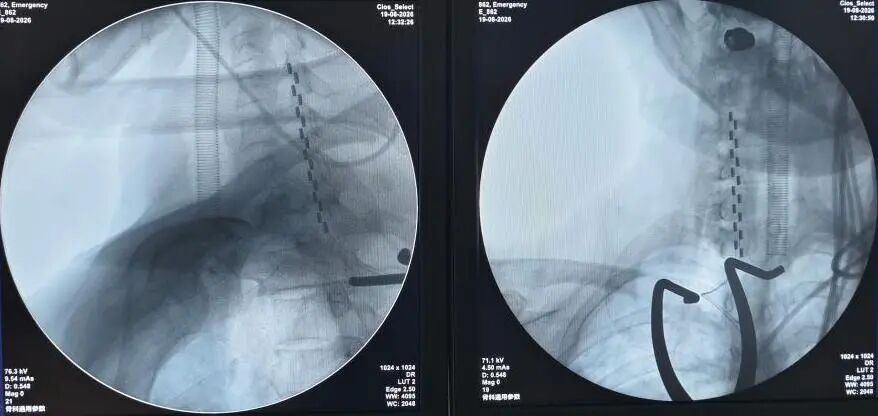
Case 1: A young woman suffered a sudden cerebral hemorrhage in December 2022 and underwent hematoma evacuation at a local hospital. She was subsequently diagnosed with Moyamoya disease at another hospital, leading to central nervous system damage and subsequent secondary spastic dystonia. After undergoing various treatments including brachial plexus root resection (distal end of the contralateral C7 nerve and proximal end of the ipsilateral C7 nerve) suture, brachial plexus nerve (contralateral C7 nerve) transfer, and allogeneic nerve transplantation, her muscle tone decreased somewhat, but she still experienced left-sided limb weakness, sensory disturbances, and increased muscle tone . Her modified Ashworth scale score was 3 for the left upper limb and 4 for the left lower limb. Seeking further improvement in muscle tone, she consulted the Department of Neurosurgery at Beijing Tiantan Hospital in August 2026. After thorough evaluation, the patient met the inclusion criteria for the "Prospective, Multicenter, Blinded, Randomized Controlled Clinical Trial of Implantable Spinal Stimulator System for the Treatment of Spastic Dystonia". The spinal cord stimulation system was implanted on August 19, 2026. Intraoperative testing showed complete coverage, and postoperative recovery was good with no surgical/device-related complications.
Case 2: A middle-aged male presented with a C3-T3 intramedullary lesion, accompanied by decreased sensation in both lower legs and feet, and decreased muscle strength in both lower limbs (more pronounced on the right side). He also experienced slight tightness in the three ulnar fingers of his left hand. On June 3, 2024, he underwent microscopic resection of the intramedullary spinal cord tumor. The surgery was successful, but he still experienced residual motor dysfunction in both lower limbs, which progressed to secondary dystonia. Various rehabilitation treatments were ineffective. In August 2026, due to limited movement in both lower limbs, increased muscle tone (more pronounced on the right side), and inability to walk independently, he sought further surgical treatment at the Department of Neurosurgery, Beijing Tiantan Hospital. After thorough evaluation, he met the inclusion criteria for a prospective, multicenter, blinded, randomized controlled clinical trial of an implantable spinal cord stimulator system for the treatment of spastic dystonia. On August 31, 2026, a spinal cord stimulation system was implanted. Intraoperative testing showed complete coverage, and postoperative recovery was good with no surgical/instrument-related complications.
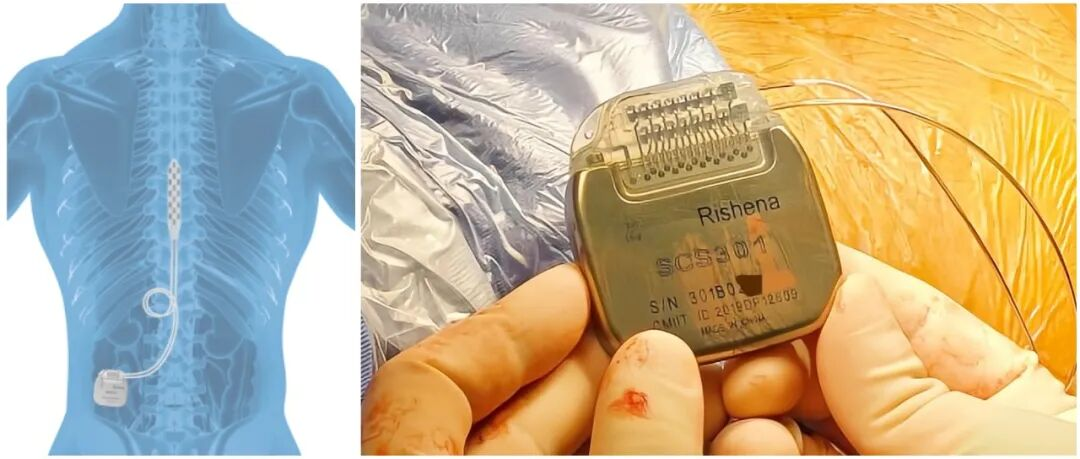
Case 3: An elderly male underwent tumor resection for a spinal ependymoma (a space-occupying lesion within the spinal canal of the thoracic spine) in 2025, subsequently developing bilateral lower limb motor dysfunction and increased muscle tone. Various rehabilitation therapies and medications were ineffective. His right lower limb proximal muscle strength was grade 3, distal muscle strength grade 4, and left lower limb muscle strength was grade 4-5. He also experienced bilateral lower limb hypertonia and constipation. Seeking improvement in motor function, he consulted the Department of Neurosurgery at Beijing Tiantan Hospital in September 2026. After thorough evaluation, he met the inclusion criteria for a prospective, multicenter, blinded, randomized controlled clinical trial of an implantable spinal cord stimulator system for the treatment of spastic dystonia. On September 11, 2026, a spinal cord stimulation system was implanted. Intraoperative testing showed complete coverage, and postoperative recovery was good with no surgical/device-related complications.
principal investigators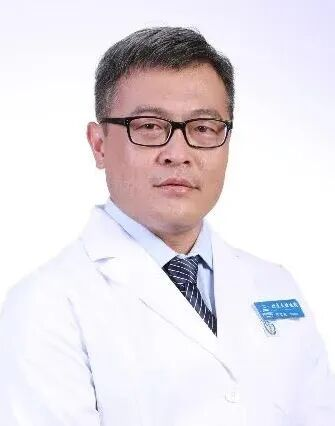
Jia Wenqing is the Deputy Director of the Neurosurgery Center and Director of the Spinal Surgery Department at Beijing Tiantan Hospital. He is a Chief Physician, Professor, Doctoral Supervisor, and Master's Supervisor. He is the Vice Chairman of the Spinal Cord and Spinal Disease Group of the Neurosurgery Branch of the Chinese Medical Association, the Vice Chairman of the Spinal Cord and Spinal Neurosurgery Group of the Neurosurgery Branch of the Chinese Medical Doctor Association, and the Vice Chairman of the Spinal Cord and Spinal Disease Group of the Neurosurgery Branch of the Beijing Medical Association. With 30 years of experience in neurosurgery, he has received extensive training in the United States and Europe. He has led and participated in numerous research projects, including the 14th Five-Year Plan National Key Research and Development Program, the National Natural Science Foundation of China Major Project, the Beijing Natural Science Foundation, the Beijing Outstanding Talent Program, the 12th Five-Year Plan National Science and Technology Support Program, the Capital Health Development Research Project, the Capital Clinical Characteristic Application Research, the Beijing Health System High-Level Talent Discipline Backbone Program, and the Beijing Municipal Health Bureau's Sailing Plan. He specializes in clinical practice, teaching, and scientific research in the field of neurosurgery and spinal cord and spine surgery. He is skilled in the diagnosis and treatment of various spinal cord and spine diseases, such as spinal cord tumors, congenital malformations, degenerative spinal diseases, and acute and chronic spinal cord injuries. He has spearheaded the development of several neurosurgical guidelines/consensus papers for the treatment of spinal cord and spine diseases. He has achieved great skill in microsurgery for spinal cord tumors and minimally invasive treatment of spinal cord and spinal diseases.